
Five years ago, most small businesses could keep technology running with a simple approach: if something stopped working, they called IT.
Today, that same business may depend on Microsoft 365, cloud applications, VoIP, remote employees, cybersecurity tools, mobile devices, and dozens of connected services that must work together without interruption. Technology hasn’t simply become more advanced. It has become part of almost every business process.
According to Gartner’s November 2024 forecast, worldwide spending on public cloud services is expected to reach $723.4 billion in 2025, while 90% of organizations are expected to adopt a hybrid cloud approach by 2027. As businesses rely on a growing mix of cloud services, on-premises infrastructure, remote users, and connected applications, managing technology becomes significantly more complex than it was just a few years ago.
As technology has changed, the way businesses manage it has had to change as well.
That’s why more organizations are moving toward Managed IT Services.
What are Managed IT Services?
At their core, Managed IT Services provide continuous management of a company’s technology instead of waiting until something fails.
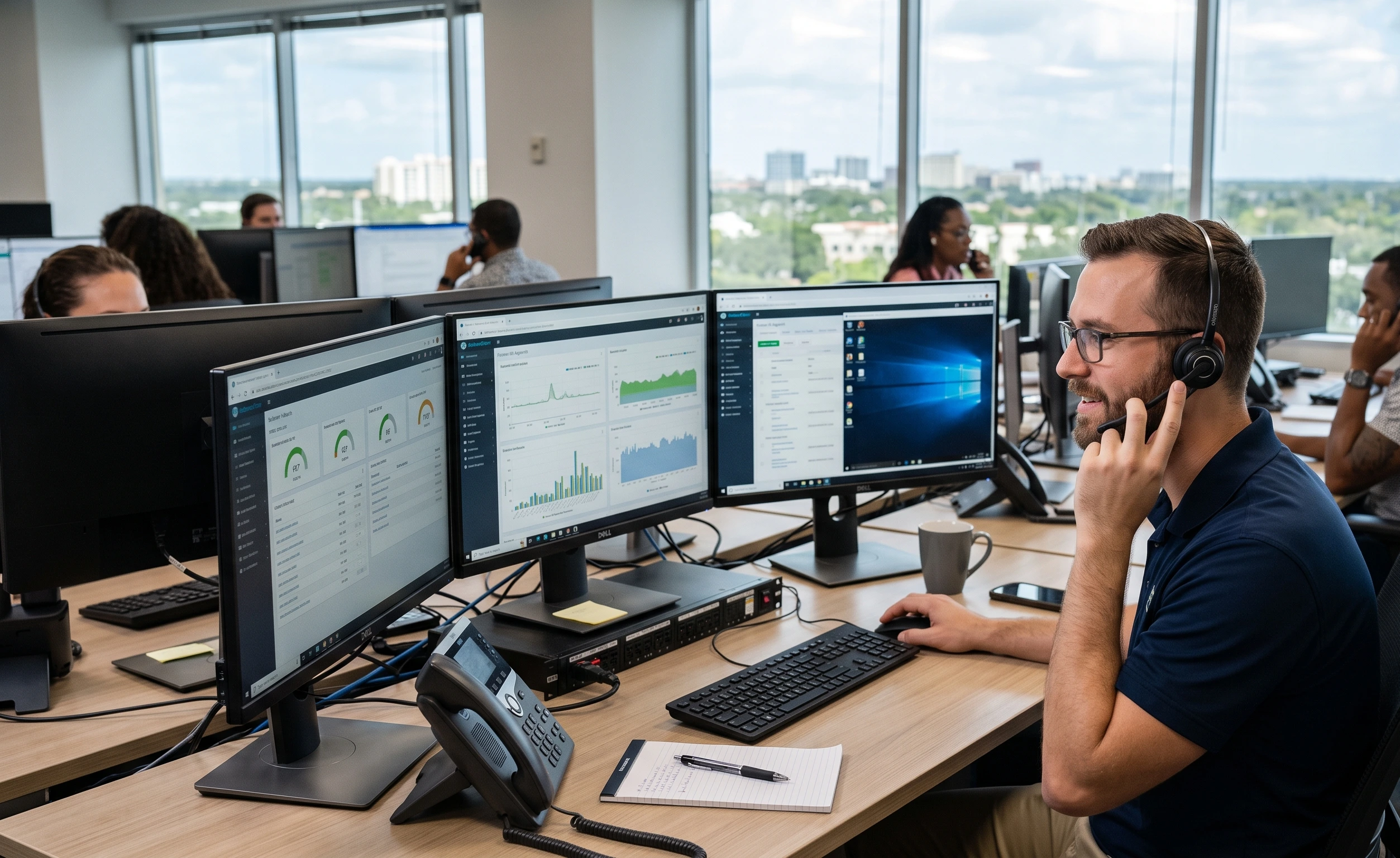
Rather than responding only when an employee reports an issue, an IT partner continuously monitors infrastructure, manages updates, reviews system health, supports users, strengthens security, and helps technology evolve alongside the business.
The objective isn’t to eliminate every problem. It’s to reduce the number of problems that ever reach your employees.

Why is the break/fix model becoming less effective?
The break/fix model wasn’t designed incorrectly. It was designed for a different business reality.
When most employees worked in one office and business systems were relatively simple, reacting to isolated incidents was often enough.
Today’s environment is different.
Applications depend on cloud platforms. Employees work from different locations. Vendors access company systems remotely. Security updates are released constantly. A single business process may rely on multiple technologies working together.
When technology becomes part of daily operations, waiting for something to fail before reviewing the environment becomes increasingly difficult to sustain.
The question is no longer “Who fixes the problem?”
It’s “How do we reduce the chances of that problem happening in the first place?”
Why are businesses outsourcing IT?
Many business owners assume outsourcing is primarily about reducing costs.
Increasingly, it is about accessing capabilities that are difficult to build internally.
Growing companies need expertise across networking, cloud platforms, cybersecurity, backups, compliance, endpoint management, and strategic planning. Maintaining that level of specialization in-house isn’t realistic for every organization.
A managed services provider gives businesses ongoing access to those capabilities while allowing leadership to stay focused on customers, operations, and growth.
Are Managed IT Services worth it?
For many small businesses, the better question is whether their current IT strategy still reflects how the business operates today.
If your company relies on technology to communicate with customers, collaborate internally, protect business data, and keep operations moving, then technology is no longer just a support function.
It is part of the business itself.
Managing that environment proactively provides visibility into constantly changing systems, helping organizations identify operational issues before they become recurring interruptions.
That doesn’t mean every issue can be prevented. It means fewer surprises, better planning, and a more resilient technology environment.

How do you know when it’s time to change?
Most businesses don’t switch to Managed IT Services after a major outage. They switch when they realize something much more important:
Their business has evolved, but the way they manage technology hasn’t.
If that sounds familiar, you’re not alone. According to Verizon’s 2025 Data Breach Investigations Report, ransomware was present in 88% of breaches involving small and medium-sized businesses.
While not every business will experience a ransomware attack, the report reinforces the importance of understanding what’s happening across your IT environment instead of waiting until a problem demands attention.
Technology has changed. Has the way you manage it? If you’re not completely sure, that’s the conversation worth having.
At NetVoiX, we help businesses across South Florida understand how their technology is performing today and whether their current IT strategy is prepared for tomorrow. Through proactive assessments, continuous management, and long-term planning, we help organizations reduce recurring issues, improve operational resilience, and build technology environments that support growth instead of slowing it down.
Because the best time to discover weaknesses in your IT environment is before they become tomorrow’s business interruption.
Not sure if your IT environment is supporting growth or creating risk? Let’s start the conversation.

Netvoix helps companies maximize their technology investments by providing comprehensive, timely, and cost-effective IT services.
VALUE-DRIVEN SOLUTIONS THROUGH TECHNOLOGY