

Downtime is often misunderstood in manufacturing environments. While it’s easy to blame machinery or supply chain issues for production delays, many of the most damaging slowdowns originate from an unlikely source: the network. Misconfigured infrastructure, data transmission lags, and invisible performance bottlenecks quietly contribute to unplanned outages without being officially recognized as root causes.
Most manufacturers have systems in place to monitor equipment performance. However, few apply that same level of scrutiny to their network health. This oversight creates operational blind spots, especially in increasingly connected production environments.
The Digital Side of Downtime
Not all disruptions are mechanical. According to the 2025 Smart Manufacturing and Operations Survey by Deloitte, 92% of surveyed manufacturers believe smart manufacturing will be the main competitive driver over the next three years. Yet, many operations still operate without full visibility into the digital infrastructure that connects critical systems.
The result is a mismatch between business expectations and technological readiness.
While the average cost of downtime in large-scale manufacturing is estimated at $260,000 per hour, as highlighted in The High Cost of Downtime: What U.S. Manufacturers Lose Each Month (Ames Electrical), this figure rarely includes the impact of micro-outages, packet loss, or synchronization delays that compound over time. These “invisible failures” can reduce throughput, distort data-driven decisions, and strain IT and operations teams.

Are We Measuring Wrong Things?
Monitoring equipment is standard practice; vibration, pressure, and temperature readings are routine. However, oversight is often reactive or fragmented regarding the network and the layer connecting systems, devices, and users.
The question is not whether systems work in isolation but function reliably as part of a connected whole. IT teams can’t anticipate problems, quantify risk, or align infrastructure with production targets without full visibility.
What’s often missing is a structured view of:
- Network performance over time (latency, bandwidth, congestion patterns)
- Configuration consistency across infrastructure
- Change management and version control across devices
- Security postures that may be outdated or unverified
Most importantly, I need a way to translate this data into business-relevant terms.
Rethinking What Counts as “Infrastructure”
Manufacturing teams routinely budget for machinery, building improvements, and materials. However, the digital layer that keeps operations synchronized, secured, and scalable is often an afterthought — funded incrementally or managed by overloaded internal teams.
This isn’t a question of neglect — it’s a matter of misalignment. In many cases, downtime is not caused by the absence of tools or monitoring but by the lack of a unified strategy to evaluate network health and performance as a critical operational asset.
When the network becomes a system of record — not just a communication channel — the opportunity to prevent future failures increases dramatically.
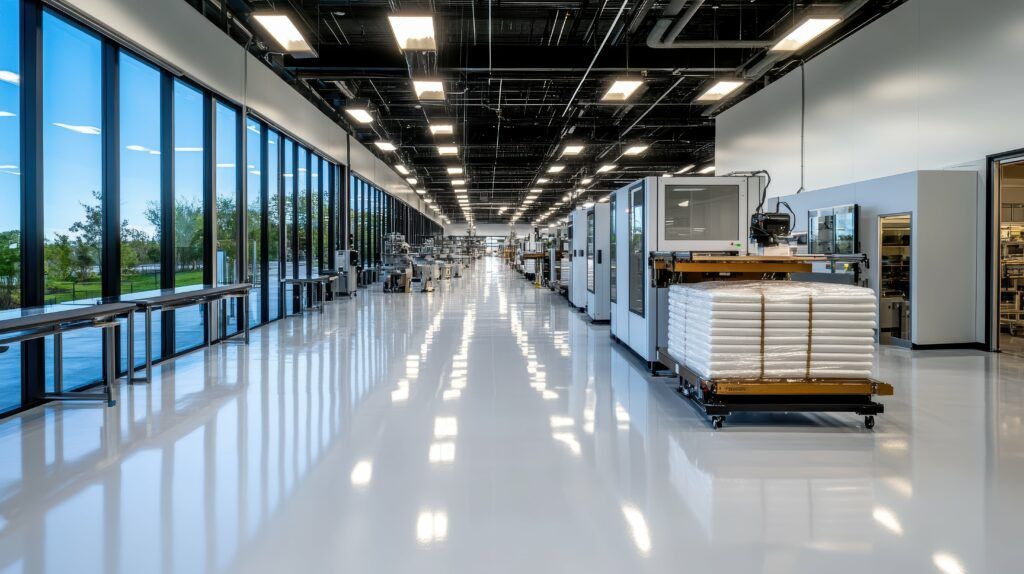
Monitoring as a Strategic Practice: Minimizing Downtime
Visibility doesn’t eliminate failure but changes how organizations respond to it. Rather than treating IT incidents as isolated problems, manufacturers can begin to view digital performance as part of overall operational health.
This requires more than just tools — it requires a commitment to a practice of evaluation: periodic network health reviews, risk benchmarking, and integrated reporting that leadership can understand and act on.
Such practices protect uptime, strengthen cross-departmental alignment, enhance operational resilience, and prepare organizations for scale.
The Road Ahead
As smart manufacturing evolves, the network will only grow in complexity and importance. Manufacturers that continue to view it as a passive utility — rather than an active part of their production strategy — will struggle to adapt in environments where speed, visibility, and trust in data are non-negotiable.
The true cost of downtime isn’t always found in one dramatic failure — it’s often hidden in slowdowns that go unnoticed, performance metrics that can’t be trusted, and a growing gap between what IT sees and what the business expects.
Ready to take a deeper look?
If your organization is serious about building a more resilient digital operation, it’s time to look beyond the machines. A healthy network is no longer optional — it’s a prerequisite for productivity, scalability, and long-term competitiveness.
Let’s connect to explore how visibility and strategic monitoring can reduce risk and uncover what’s slowing your operations down.

Netvoix helps companies maximize their technology investments by providing comprehensive, timely, and cost-effective IT services.
VALUE-DRIVEN SOLUTIONS THROUGH TECHNOLOGY