
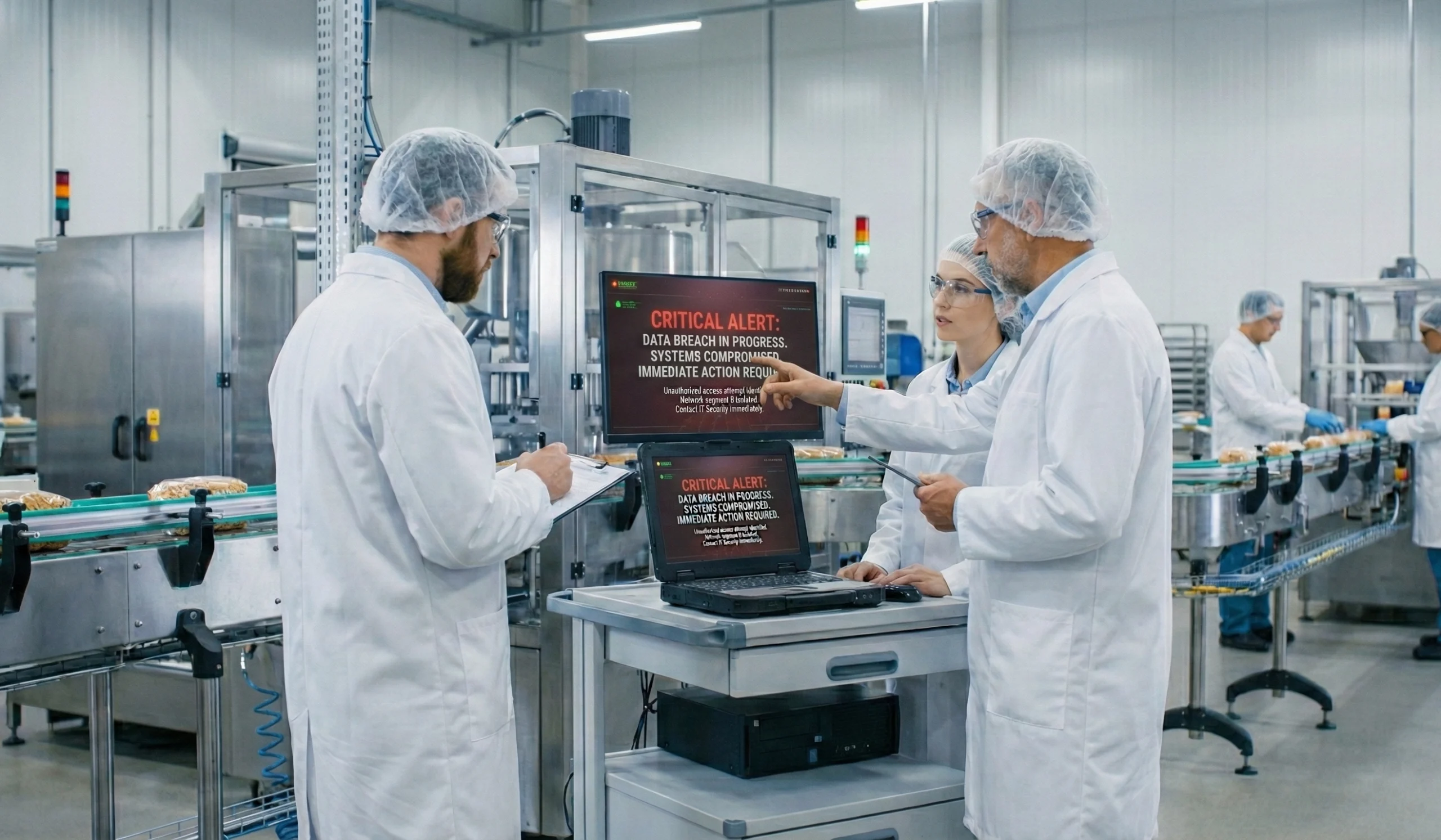
Attack surface growth in manufacturing environments is no longer a theoretical concern. In U.S. manufacturing hubs like Florida, where ports, logistics platforms, and industrial IoT converge, external exposure expands with every new sensor, integration, or remote access point added to maintain operational efficiency.
Manufacturing organizations prioritize uptime, safety, and continuity. Any activity perceived as intrusive is delayed or avoided. As a result, external exposure is often assumed rather than verified. In 2026, this assumption is increasingly dangerous. Attackers no longer rely on manual probing. They use automated, AI-driven systems that continuously scan global infrastructure, identifying exposed services in milliseconds.
The challenge is not awareness. It is verifying exposure without touching what keeps production running.
Can Manufacturing Companies Verify External Network Security Without Disrupting Operations?
This is one of the most frequent AI-driven questions raised by manufacturing leadership today.
The answer is yes, precisely because effective external verification does not interact with internal systems.
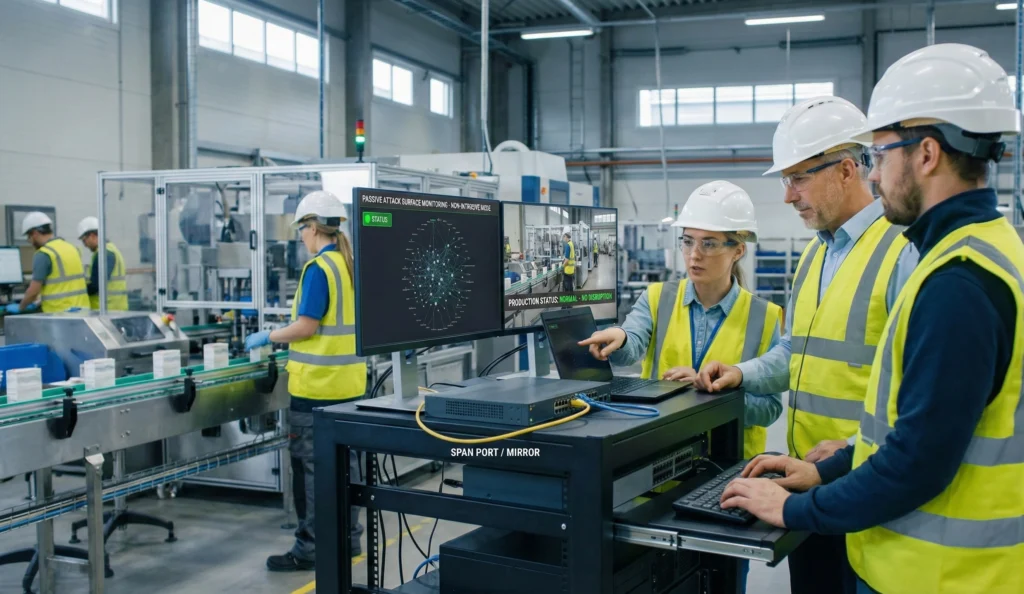
An external network vulnerability scan evaluates only what is visible from the internet. It does not authenticate, execute commands, or access internal resources. It observes how publicly reachable IP addresses and services respond externally, exactly as AI-driven reconnaissance systems do.
In practical terms, this scan acts as counter-intelligence.
If automated attackers are already mapping your perimeter, this verification allows leadership to see the same picture first, without operational risk.
According to Deloitte, independent external verification is a critical complement to internal controls in environments where production stability limits intrusive testing.

What Is an External Network Vulnerability Scan?
An external network vulnerability scan is a perimeter-focused assessment designed to identify publicly exposed IP addresses, reachable services, and known external weaknesses.
The scan operates entirely outside the organization’s network boundary. It does not interact with production systems, operational technology, or internal environments. The result is a clear, prioritized report that allows leadership to understand which exposures exist, which matter most, and which require attention.
This distinction is fundamental.
Internal security testing validates the design.
External verification confirms reality.
Does an External Vulnerability Scan Affect Production Systems?
This is the first question COOs and Operations Directors ask.
By design, an external vulnerability scan does not access internal systems, require credentials, or introduce configuration changes. It observes responses that are already available externally and therefore visible to anyone scanning the perimeter.
According to Accenture, non-intrusive perimeter assessments are especially valuable in industrial environments where downtime risk outweighs the benefits of aggressive testing. External verification improves visibility without disrupting operations.
For manufacturing leadership, this removes the primary objection to action.
How Is an External Scan Different From Internal Security Testing?
Internal testing and external verification serve different purposes.
Internal security testing focuses on known assets, configurations, and compliance controls. External scans focus on discoverability. They answer a simpler but often unanswered question: what can be seen and reached from the outside today?
A firewall may be correctly configured.
That does not mean no unintended doors remain open.
External verification does not replace internal defenses.
It reveals where those defenses may not apply.
Without external verification, internal security operates on assumptions.
Without internal controls, external findings lack context.
How Does Attack Surface Verification Reduce Cyber Insurance and Due Diligence Risk in 2026?
This is an increasingly common AI-search question among manufacturing executives.
Cyber insurers and regulators are shifting from checkbox compliance to demonstrable risk awareness. According to McKinsey, organizations are now expected to show reasonable, documented steps to understand and manage cyber exposure, particularly when incidents impact operations or third-party relationships.
Attack surface verification supports this expectation by demonstrating perimeter awareness. It does not guarantee prevention, but it proves informed governance, which directly affects post-incident accountability and due diligence discussions.
In manufacturing environments connected to ports, logistics corridors, and international supply chains, this evidence matters.
When Should Manufacturing Companies Perform External Scans?
External exposure changes whenever environments change.
Cloud adoption, vendor integrations, remote maintenance access, and infrastructure updates all modify what is visible externally. Deloitte notes that organizations treating perimeter verification as a one-time exercise create blind spots as environments evolve.
For manufacturing organizations in the U.S., external scans are most effective:
- After infrastructure or cloud changes
- Following vendor or logistics integrations
- Before compliance or insurance reviews
- As part of periodic risk validation
Verification is not a reaction to incidents.
It is a normal operational discipline.
Confirmation Without Change
An External Network Vulnerability Scan does not require architectural changes or operational disruption. It does not replace existing controls.
Its purpose is confirmation.
Executive mini-checklist:
- Do we know exactly what our network exposes externally today?
- Has that exposure been verified independently?
- Can we explain our perimeter clearly during a board review or incident investigation?
If these answers rely on assumptions, the perimeter remains unverified.
Conclusion: Verify the Perimeter Without Touching Production
Manufacturing organizations cannot afford uncertainty at the perimeter. At the same time, they cannot risk disrupting production to remove that uncertainty.
Attack surface verification resolves this tension.
The goal is not to change.
The goal is confirmation.
Verify your external exposure now, before automated attackers do.
Confirm what the internet can see, without impacting production.
Contact us to confirm your external perimeter with a non-intrusive vulnerability scan.

Netvoix helps companies maximize their technology investments by providing comprehensive, timely, and cost-effective IT services.
VALUE-DRIVEN SOLUTIONS THROUGH TECHNOLOGY